|
For album
reviews of A PIPER'S DREAM click here.
For album reviews of
LEITRIM'S HIDDEN TREASURE by The McNamara Family click
here. 
FORT
OF THE JEWELS -This recording is all about the music.
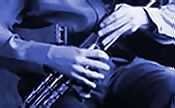
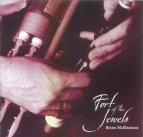
The understated cover shows the piper's strong, relaxed fingers on the chanter.
That, in essence, is what piping is all about. It is an especially apt image for
this recording, which is intensely personal, beautifully honest, enchanting and
mind boggling all at the same time. Brian McNamara
needs no introduction here. One of the great moments in the history of the Club
was Brian's performance at the Tractor Tavern during the last tionol. Suffice
it to say, McNamara comes from a famous musical family of Leitrim. He is justly
recognised as one of the most elite and musical pipers anywhere in the world.
This is his second solo CD, and although it would have seemed near impossible
by virtue of the strength of the recording, he takes his music to a new level
with this recording. The first and the last thing
you will notice is McNamara's huge range in terms of technique, tone and expression.
McNamara attacks certain notes on the beat with articulations that are as aggressive
as a snare drum. Other times note's presence is felt, rather than heard. He really
works the chanter, bending, cutting, popping and massaging the notes and embellishments.
He will push the beat for a number of phrases, and then fall slightly in back
of it. This is delightfully agonizing for the listener. The subtle variations
in emphasis and lilt are completely natural. The reels and jigs roll along relaxed
and up-tempo. For as much detail as he puts in a tune, they never sound overwrought
or purely flashy. This is particularly true of track15, Ormond Sound and The Connaught
Heifiers. His slow airs are elaborate, flowing and evocative. They never sound
contrived. Taimse im'chodladh, which is easy to over play, answers the question,
"how do you fly with both feet on the ground?". There
are just two tracks of hornpipes. If I have any complaint about this recording
at all it is that I would like to hear more hornpipes. The concluding track, Kilcooley
Wood and The not so bashful bachelor is so clear and unfettered it's impossible
to praise it without over stating the obvious. Benedict Koehler joins Brian on
the other track of hornpipes, Mrs Crotty's and The Humours of Tullycrine. The
pipers deliver these muscular and tawny tunes with the confidence of a boxer marching
into the ring. Too often regulators are used almost
as an after thought. When they suddenly appear it's a shock, and then they are
gone. After hearing this recording, I will always hear regulators differently.
Here the melodic fit is tight and full of purpose. McNamara's regulators are perfectly
balanced with the chanter and the drones, seemless. In
the course of preparing for this review I've listened to the CD at least fifty
times. I've reread piping tutors and listened to many other CDs, trying to get
a better idea what to say about it. It became clear anything one can say about
this CD is beside the point. When standing in front of a Picasso, anything you
might say is made ludicrous by the presence of greatness. Just listen.
John
Dally, The Piper's Review, (Iris na bPiobairì), Autumn, 2004
One of the most appealing aspects of Irish traditional music is the
movement of the art form through the generations. Brian McNamara, having been born into
a very musical family, and growing up in an area endowed with a great wealth of
music and musicians, fits neatly into this movement. Just a few years ago we were treated to a wonderful extravaganza in
his first solo album: “A Piper’s Dream”. In this album he has
taken the art of Uilleann piping to new heights. Brian is, truly, a master of
his craft. This is very evident in his carefully controlled use of the chanter,
his lovely, clean fingering, his mastery of ornamentation and his innate talent
for spontaneous, subtle melodic variations which few others can match. His duet performances with fellow piper, Benedict Koehler, display
a perfect musical understanding between them. Their playing is so tight that it
is necessary to listen carefully to detect both instruments. The lovely, sensitive
harp accompaniment by Gráinne Hambly, herself a musical genius in her own
right is never overdone and complements the melody perfectly, showing her great
understanding and “feel” for the music. The selection of tunes makes us aware of Brian’s extensive repertoire.
He treats us to more of the rare gems from the musical legacies of Alexander Sutherland,
Stephen Grier and the Reilly musical dynasty of South Leitrim and he also includes
tunes from other parts of the country. It is particularly interesting to find
tunes from the modern composers such as Paddy Fahey, Josie McDermott, Charlie
Lennon, Paddy O’Brien and Seán Ryan getting special treatment which
should make their composers proud. Brian’s playing reveals his pure love and joy of the music, utterly
devoid of pretence, and blissfully free from commercial gimmicks. The sublime
personal style, the elegant arrangements and his vivid musical imagination shows
a formidable depth of tradition in his playing, yet the sound is fresh and exciting. This is pure Irish traditional music played as it should be played.
A precious musical gem! Paddy
Ryan , 2004
Brian
McNamara’s playing style is instantly recognisable; a veritable musical
‘fingerprint’, an individualism which I thought had almost disappeared
in the current climate of traditional music popularity. Things to listen for on
this disc, after you have enjoyed the tunes, are the organ-like quality which
comes from bringing all the sounds of the pipes together, the subtle use of varying
tone colours on the chanter, to emphasize the music, the shear enthusiasm and
verve that brings the music across so well. Just as I am very proud of my C set
and happy to hear it played so brilliantly I feel sure that David and Benedict
feel equally for their wonderful D set. Brian is now very well known around the
world as both a performer and a teacher, so this new recording will be welcomed
by all who enjoy good piping. Geoff
Wooff, 2004
The
music on this CD shows Brian McNamara as a mature and accomplished piper. His
playing is skilful, tasteful and steady and his use of ornamentation and piping
techniques brings out the essential musical nature of his selections. The tunes
have been well chosen - Brian has a loyalty to Leitrim which has rewarded both
the listener and himself with some rare musical gems from his native county. There
are other sources also, with tunes supplied from famous players and known traditional
composers of recent times, as well as music learned from friends and favourite
recordings and it is all rounded off by a couple of fine slow airs. Peter
Browne
Master Piper calls the tune
The
uilleann pipes are the ultimate solo instrument. With the chanter providing the
melody, the drones laying down a sonorous background and the regulators adding
stabs of harmony, the instrument is a miniature orchestra.
Brian McNamara is
a master conductor of this happy combination of wind and reed. Fort of the Jewels
is exhibit three in McNamara's well-argued case for the music of native south
Leitrim, and follows on Leitrim's Hidden Treasure (1998) and A Piper's Dream (2000).
He takes a minimalist line in his recording technique, using first or
second takes to capture the essence of the music, using a single microphone and
applying little or nothing in the way of post-production. He values performance
over technical perfection.
He believes that the music is not a product
to be packaged but a delicate, living organism. He declares that the music is
more important than the musician and that he is simply a medium for the music.
Those beliefs are more than evident on this recording.
Fellow piper - and
pipe maker - Benedict Koehler joins for a couple of tight duets and Grainne Hambly
adds some simple but highly effective harp accompaniment, but this is a genuine
solo album. South Leitrim may form the focus but many tunes are from the common
repertoire. It is perhaps unfair to pick highlights from such a carefully chosen
repertoire, but among those tunes that jump out from the speakers are a pair of
local hop jigs, Top the candle and Do it Fair.
Dun na Sead comes with the most
comprehensive sleeve notes that you are ever likely to encounter, full of information
and attitude.
Pat Ahern, Irish Examiner, July 15th 2004.
Brian McNamara is a Leitrim
piper who was featured on the excellent McNamara family CD Leitrim's Hidden Treasure
in 1998, and since then he's established quite a reputation as a player and tutor.
This is his second solo album, packed with pipe tunes from South Leitrim and beyond,
played in Brian's distinctive style. From track 1 it's obvious that the music
here is first class. The packaging is spot on too, with excellent notes and graphics.
Brian plays in a precise and measured way, taking
things at a reasonable pace so all the intricacies of his fingerwork are plain
to hear. His technique is more akin to the closed, staccato style of Rowsome or
Ennis than the fluid open traveller style, but the notes are nicely spaced, giving
an open weave to the music. Brian isn't wedded to the staccato style by any means:
the slow air Dún na Séad shows all the marks of traveller piping
with its wild blasts of sound and haunting slides. One of the things which makes
Brian McNamara such a fine piper is his intuitive feel for the music, and he adapts
his style to suit the tune rather than the other way round. The opening set of
jigs includes a free-flowing interpretation of Charlie Lennon's Handsome Young
Maidens, and a couple of minutes later there's a crisp controlled canter through
the snappy slip-jig Top The Candle, perfect for each melody. Brian
is joined on several tracks by young harpist Gráinne Hambly, and this combination
evokes the ancient glories of Irish music. There are also three powerful duet
tracks with fellow piper Benedict Koehler, who also made one of the sets Brian
plays here: pipe duets are rare in recorded music, and these are a treat indeed.
The tunes are mostly well known: Mrs Crotty's Hornpipe, Hardiman the Fiddler,
Ormond Sound and the like - but the playing is rich and intoxicating. The two
pipers mix and match perfectly, complementing and exhorting each other on The
Arra Mountains and a wonderfully impromptu version of The Connaught Heifers. Highlights?
Too many to list. The blaring Bs on Redican's Mother, those opening jigs starting
with Paddy From Portlaw and ending with the fabulously titled I Love You Not And
I Care Not, presumably an early draft of What's Love Got To Do With It? Only one
third of Fort of the Jewels is given over to reels, leaving plenty of room for
pieces like The Humours of Glynn and the hornpipe The Not So Bashful Bachelor
which ends this most enjoyable and satisfying album. The reels, when they come,
are all the better for the wait: a sumptuous version of Patsy Touhey's Favourite,
the swaggering Spike Island Lasses with percussive chanter and singing regulators,
and a gentle build-up to the sparkling Sandy Over The Lea on the flat pipes. If
you can't find this CD in the shops, try www.piperbrian.com - and check out the
other Drumlin recordings too.
Alex Monaghan, The
Living Tradition, Sept./Oct. 2004
Piper Brian McNamara is
a member of the well-known Co. Leitrim musical family who released a few years
ago the wonderful album "Leitrim's Hidden Treasure." Brian's own first
solo album, "A Piper's Dream," released in 2000, already provided a
chance to hear him majestic playing and admire his command of the close, or tight
(staccato), style of piping, as well as enjoy a selection of tunes flavoured by
Brian's interest in the Leitrim local tradition. This brand new CD continues where
the previous one left off, with more great music from a masterful player, and
more seldom heard tunes from his native county. Throughout, the technical brilliance,
the glorious sound of beautifully tuned instruments, and the display of invention
in the playing make for a thrilling listening experience. Brian, who performs
on a D "concert pitch" set and C "flat" set, is joined on
a few tracks by Vermont piper and pipe-maker Benedict Koehler, himself a wonderful
player, and is sometimes accompanied by the expert harpist Grainne Hambly. On
a personal note, I will add that, having had the privilege to meet and play with
Brian, I found him to be one of the nicest people I know, a true gentleman piper.
Rating: ****
Philippe Varlet, Hard-to-find imported Irish CDs www.celticgrooves.com
Second time around,
Leitirm piper Brian McNamara's distinctive style is a triumph of precision engineering,
his control of the chanter evidence of a musician who's not so much joined to
his instrument at the hip as at the elbow and fingers. McNamara's strengths are
his clean lines and forensic exploration of the rich Leitrim piping tradition.
This collection bristles with rare tunes and stalwart slow airs, drawing on the
legacies of writers Stephen Grier and Alex Sutherland, as well as contemporary
composers including Charlie Lennon. McNamara's tight, controlled playing whispers
of Liam O Floinn's influence, but his approach to the arrangements of the title
track and his duet with Benedict Koehler on Mrs. Crotty's / The Humours of Tullycrine
are all his own. Grainne Hambly lends subtle harp too.
Siobhan Long,
Irish Times, July 23rd 2004.
Uilleann piper
Brian McNamara has already made two fine albums featuring the music of his native
south Leitrim. On Fort of the Jewels, he continues to mine this evidently rich
seam, playing tunes learned from - and in some cases composed by - fellow musicians
from the townlands and villages around his homeplace. While the emphasis is on
solo pipes, harpist Grainne Hambly provides subtle backing for several tracks,
on two of which the pair are joined by piper Benedict Koehler for a bit of lively
duet playing. The booklet features extensive notes on the background of each tune,
as well as a thoughtful introductory essay by McNamara.
Eight point five /
TEN.
Sarah McQuaid, HOTPRESS, Sept. 2004
| |